
Polycystic Ovarian Syndrome
Evidence-based article by L. Jones, RN, examining medical and nursing approaches to insulin resistance and reversal processes.
Polycystic Ovarian Syndrome Attributes
Polycystic Ovarian Syndrome (PCOS) is likely the most common reproductive hormone disorder in women. It is a group of disorders characterized by excess androgen production by the ovaries, irregular menstruation, and many “cysts” on the ovaries, which are visible by ultrasound. Note: I said it is a group of disorders. Typically, for a diagnosis, two of the three characteristics must be met.
Not all cases of PCOS present in the same way. Not all patients have every symptom. PCOS is also highly correlated with insulin resistance and hyperinsulinemia in many (not all) cases. Since I am the insulin girl, we will be focusing on the subcategories of PCOS that involve dysfunctional insulin and (often) weight gain. This article may not be applicable to subtypes of PCOS with normal insulin levels and sensitivity.
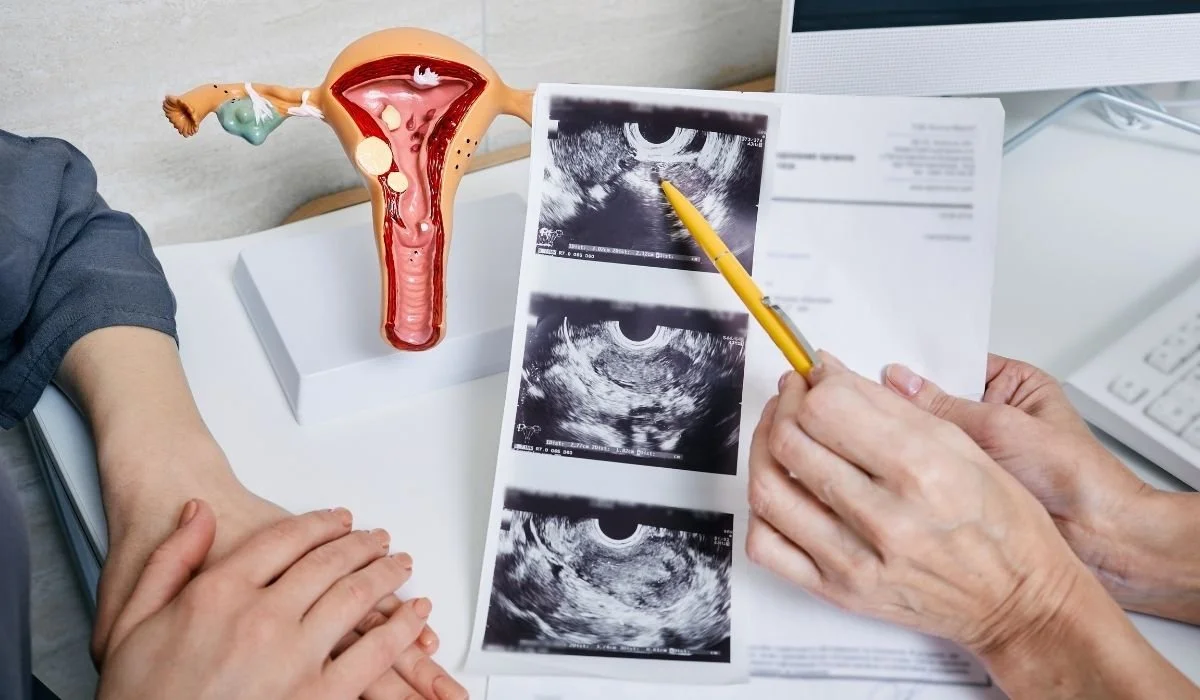
OK… Time for an A&P Lesson.
Ovaries are organs in the body that produce eggs and the female hormones, progesterone and estrogen. In PCOS, the ovaries produce more androgens than they should.
Androgens are male sex hormones, such as testosterone. This can lead women with PCOS to have increased body and facial hair growth, acne and oily skin, a deeper voice, male pattern baldness, and other masculine characteristics.
This often causes psychological distress and can lead to anxiety, depression, and body image issues.
In regular menstruation, once a month, an egg cell matures in the ovaries, exits the ovaries, then slides down the fallopian tubes, and into the uterus. If an egg is fertilized by a sperm cell, it will implant in the uterus, develop into a fetus, and then give birth to a baby. If it does not become fertilized, the egg cell, along with the uterine lining, is shed, and you have menstruation. Due to various hormonal imbalances in PCOS, the menstrual and ovulation cycles can become disrupted, leading to irregular periods.
Often, during the ovulation cycle, the egg cells do not fully mature. Hormonal imbalances halt maturation toward the end of egg development. Instead of the immature egg fully developing and exiting the ovaries, the egg stops developing and remains on the surface of the ovaries. These immature, trapped eggs accumulating over time are the “cysts” on the ovaries. Due to the lower number of eggs reaching maturity (and the ones that do are often of poor quality), and the androgenic hormones disrupting normal menstruation and childbearing, women with PCOS experience high rates of infertility and miscarriage.

Keep in mind: this was all simplified for brevity. If you want to get into the nuances on your own, they are quite fascinating.
Most women with PCOS have co-occurring hyperinsulinemia or insulin resistance. This can lead to weight gain, hypertension, high cholesterol, and weight loss resistance. Women with PCOS are at a higher risk of developing prediabetes, type II diabetes, metabolic syndrome, and all the other long-term health complications associated with these diseases (heart disease, vascular disease, strokes, certain cancers, alzheimers dementia, etc).
Women with PCOS are usually treated with hormone replacement and androgen blockers to help regulate their cycle, and relieve symptoms such as hair growth/loss, acne, and other masculine characteristics. Women with PCOS who wish to become pregnant are typically treated with fertility drugs. Because female hormones are cyclical and do not stay at the same levels all the time, treatment for PCOS can become complex and have a range of side effects. Not to mention, anti-androgens interrupt the female hormones you are replacing, in addition to the androgens they are supposed to control. Some women find relief with medication, but for many women, treatment is frustrating.
So… What if I were to tell you hyperinsulinemia causes your ovaries to produce androgens? What if I also told you that hyperinsulinemia causes a halt in egg development that leads to ovarian cysts? It really makes you think that the cause of all this suffering is… well… actually just insulin. Right? Let’s slow down. We have a big bias here at The Reversal Project–excess insulin is the root of all suffering as far as this business is concerned. But the insulin hypothesis for PCOS is by no means proven.
First, note that this is likely a group of conditions. We often classify many things incorrectly before reclassifying them when we obtain new information. Groups of similar conditions may have multiple, multifactorial causes. We know that diabetes is a risk factor for heart disease. We know hypertension causes heart disease. Both end in heart disease, but you would be ineffective if you tried to prevent further damage to the heart by giving someone with hypertension and a perfect blood sugar an antidiabetic medication. PCOS may be similar; same result, different pathophysiologies. For some women, it could potentially all be related to insulin. For others, it may be overproduction of androgens. Or it could be a combination. Or it may not be. PCOS is not well understood.
There is a minority of women with PCOS who do not have insulin resistance, do not have hyperinsulinemia, and are not overweight. They still have issues with increased levels of androgens, masculine characteristics, irregular periods, ovarian cysts, and fertility issues. These women are usually of normal weight and do not have difficulty with insulin-related chronic illnesses. It is unlikely that insulin is involved in the symptoms experienced by this subset of women. These metabolically healthy women with PCOS are often misdiagnosed and overlooked because they do not fit into the typical PCOS phenotype. Likely, these women have increased androgen levels for one reason or another, either due to issues in the adrenal glands, ovaries, or the brain.
As discussed in other articles on insulin, insulin resistance, and hyperinsulinemia, these conditions must be addressed to maintain optimal health. This is true regardless of whether you have PCOS or not. For this reason, the standard of care for PCOS is starting to shift toward an approach involving controlling insulin and blood sugar. Increasingly, physicians acknowledge the importance of treating insulin resistance in PCOS. Metformin (a common anti-diabetic) is often used off-label for PCOS with insulin resistance. GLP-1s are often used as well. In many cases, addressing insulin and insulin resistance dramatically improves symptoms of PCOS. And if it doesn’t? Well, you can focus on the androgens, now that you have reduced your risk of diabetes, heart disease, certain cancers, and stroke.
